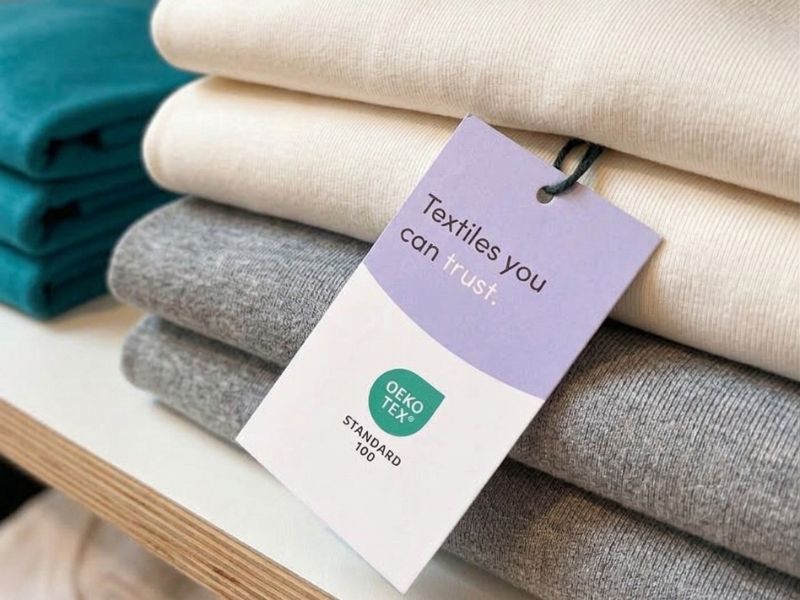
When you choose an underwear garment, you are choosing something that will stay in contact with your skin all day long. It is the first layer you wear, the one closest to you.
That is why the quality and safety of the fabric are not simply details, but the starting point.
Among the most widely recognised international certifications in this field is OEKO-TEX® Standard 100. In this article, we explain what it is, how it works and why, when you see it on a garment label, you can consider it a sign of reliability.
What is OEKO-TEX® Standard 100 certification?
OEKO-TEX® Standard 100 is a testing and certification system designed to verify that textile raw materials, semi-finished products and finished products at every stage of production, including non-textile components such as buttons, zips and sewing threads, comply with established limits for substances that may be harmful to human health.
How does OEKO-TEX® Standard 100 certification work?
Laboratory testing
Certification is only granted after an authorised OEKO-TEX® institute has carried out the required tests.
When a garment carries the OEKO-TEX® Standard 100 label, it means that every individual component of the product, from the main fabric and sewing thread to printed labels and elastic components, has been rigorously tested in laboratories to ensure that harmful substances are not present above scientifically established limits.
Product classes
Not all textile products require the same level of testing. The requirements depend, among other factors, on the intensity and duration of contact with the skin.
For this reason, OEKO-TEX® Standard 100 divides products into four different product classes, each with specific requirements.
When applying for certification, the manufacturer must provide representative samples of the materials, which are then analysed in the laboratory according to the relevant requirements.
Products that come into direct contact with the skin, such as underwear, fall into Product Class II and are tested according to specific safety parameters.
Certificate renewal
The certificate is valid for one year and must be renewed regularly.
Manufacturers are also required to report relevant changes to the materials, production processes or chemical formulations used.
It is a system designed to ensure consistent compliance over time, rather than something that is obtained once and then forgotten.
Why is OEKO-TEX® Standard 100 certification important when choosing underwear?
Underwear stays in contact with the skin for hours. It moves with your body throughout the day while also being exposed to heat and friction.
For this reason, knowing that a product has been tested and complies with established limits for harmful substances is an important factor to consider when choosing underwear.
Here are three key reasons why OEKO-TEX® Standard 100 certification is important.
1. Skin safety
For people with sensitive skin, those buying garments for their loved ones or simply anyone who wants to make a more informed choice, OEKO-TEX® certification provides an important point of reference.
It confirms that the certified product has been tested according to the applicable requirements concerning harmful substances.
2. The value of the supply chain
Certification does not only concern the finished product. It also takes into account the relevant components and stages of production.
This helps promote accountability throughout the production chain and ensures that the applicable requirements of the standard are met.
3. Certification transparency
Every certified product carries a certificate or label number that can be checked directly on the official OEKO-TEX® website.
This allows consumers to verify the information associated with the certification and check its validity.
How can you check if a garment is really OEKO-TEX® certified?
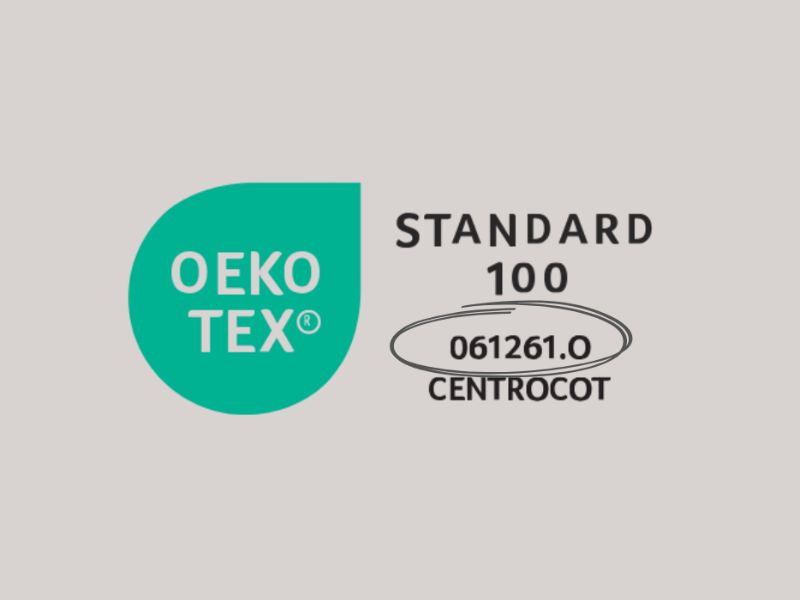
You can verify an OEKO-TEX® certification by checking the identification number shown on the product label and entering it into the official OEKO-TEX® verification tool.
This simple check allows you to confirm the information associated with the certification and its current validity.
- Find the OEKO-TEX® label: the logo should include the wording “STANDARD 100”.
- Check the certification number: an identifying alphanumeric code should appear on the label.
- Use the Label Check on the official website: enter the number into the online verification tool on the official OEKO-TEX® website to check the certification information and validity status.
Choose quality you can trust every morning. Choose Fragi
An OEKO-TEX® certified fabric is made within a supply chain that has agreed to follow a defined control process, including laboratory-tested samples, declarations of conformity and periodic checks.
This commitment requires consistency and continuity, rather than a one-off compliance exercise.
At Fragi, we choose to follow this path because we consider the safety of the end customer a priority.
Discover the Fragi underwear collection
Frequently asked questions about OEKO-TEX® Standard 100
It means that the product and its components, such as the fabric, sewing threads, labels, elastics and other accessories, have been tested according to the requirements of OEKO-TEX® Standard 100 and comply with the applicable limits for harmful substances.
No. These are two different certifications and characteristics.
OEKO-TEX® Standard 100 primarily concerns the testing of a certified product for harmful substances, regardless of whether the fibre used is organic or conventional.
Organic cotton, on the other hand, concerns the origin of the fibre and the methods used to grow and process it according to specific certification standards.
Certified products carry an identification number on the OEKO-TEX® label.
To verify it, you can use the official OEKO-TEX® Label Check service and enter the number shown on the product. The system allows you to check the information associated with the certification and its current validity.
OEKO-TEX® Standard 100 certification is normally valid for one year and must be renewed according to the procedures established by the standard.
If the company makes relevant changes to materials, production processes or chemical formulations covered by the certification, these changes must be reported to the responsible institute.
OEKO-TEX® sets specific requirements for products intended for young children.
Product Class I applies to articles for babies and young children up to 36 months and includes particularly strict limits for certain substances.
This can be a useful factor to consider when choosing underwear for children or for people who wish to pay particular attention to the substances present in textile products. However, OEKO-TEX® Standard 100 does not mean that a garment is completely free of chemicals, nor does it constitute a medical guarantee for sensitive skin.